
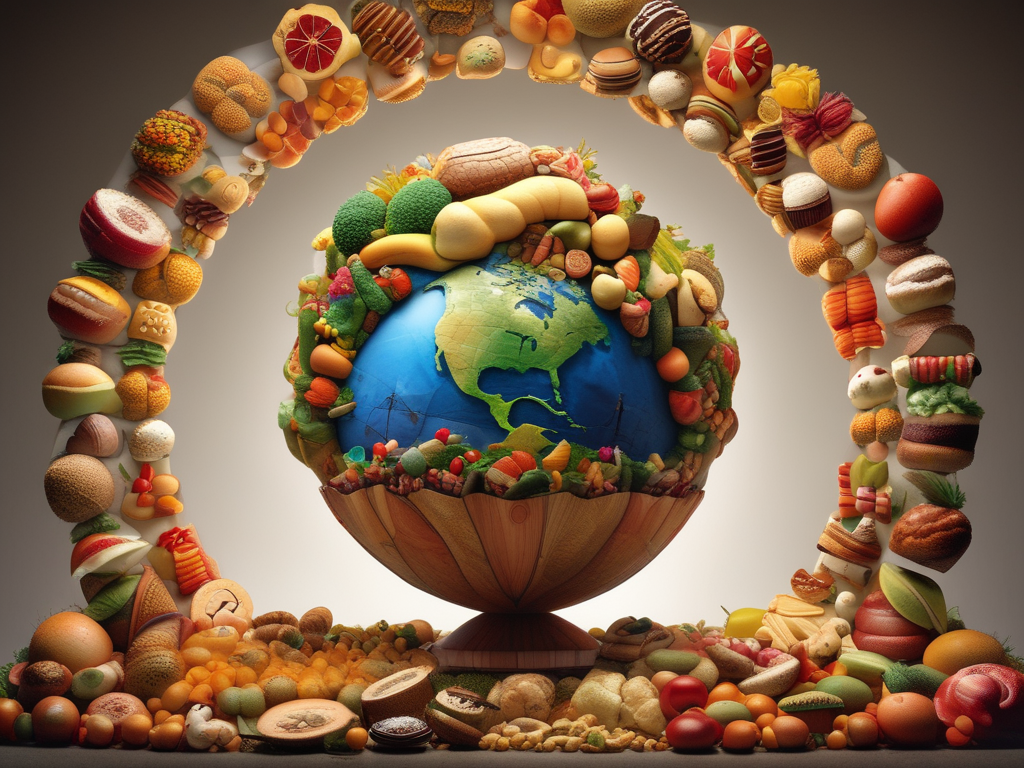
As I’ve explored in a previous post, culture is a huge recycling project. There are plenty of examples of food and ingredients that have made their way around the globe. Mostly likely, the food you eat on a regular basis is not entirely based on your culture or location, but rather mixed with influences from many different places and cultures.
Beryl Shereshewsky’s YouTube channel
I recently stumbled upon Beryl Shereshewsky‘s YouTube channel, and I’m currently bingeing her back catalogue. Her channel is about food from around the world, and most of the channel consists of videos submitted by her viewers telling about a dish in their culture. She then makes and eats the dishes on camera, giving her honest opinion of the process of making it and the taste of the dish. The videos are organized by a key ingredient or a certain use of the food such as party food or lazy day foods.
Food is a good starting point for learning about other cultures, and what I like about Beryl’s channel is that you get to know food from different cultures on a deeper level. You hear the stories or cultural significance behind each dish, and often discover how various dishes are mixed and remixed with ingredients and influences from other places. Let’s explore a few examples of how food from various cultures has been woven together to create dishes as people know them today.
Trinidadian doubles
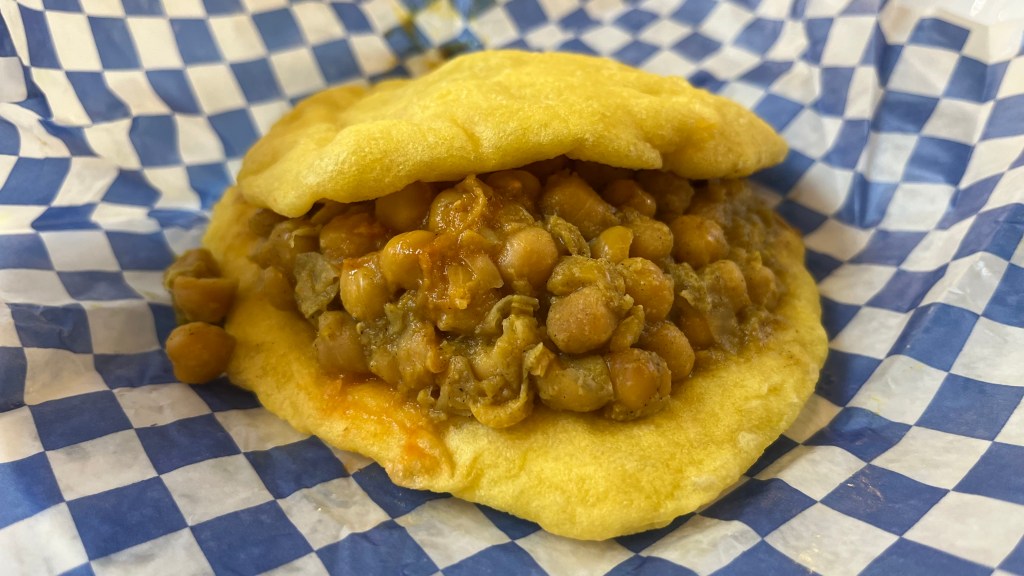
I occasionally eat doubles (fry bread with chickpeas) at my local Trinidadian food stall. This is an example of how food was brought to another place. In the 1800s, when indentured servants from India were brought to Trinidad, they brought their way of cooking and flavour preferences. In the 1940s and 50s, street vendors began selling a combination of chickpeas and fried flat bread, which was eventually called doubles because customers often asked to double the flat bread. If you’re interested in learning more about the history of doubles, you can read about it in this book written by an author who graduated from University of Manitoba. Maybe that’s why I can get doubles in my cold northern city of Winnipeg!
Indigenous bannock
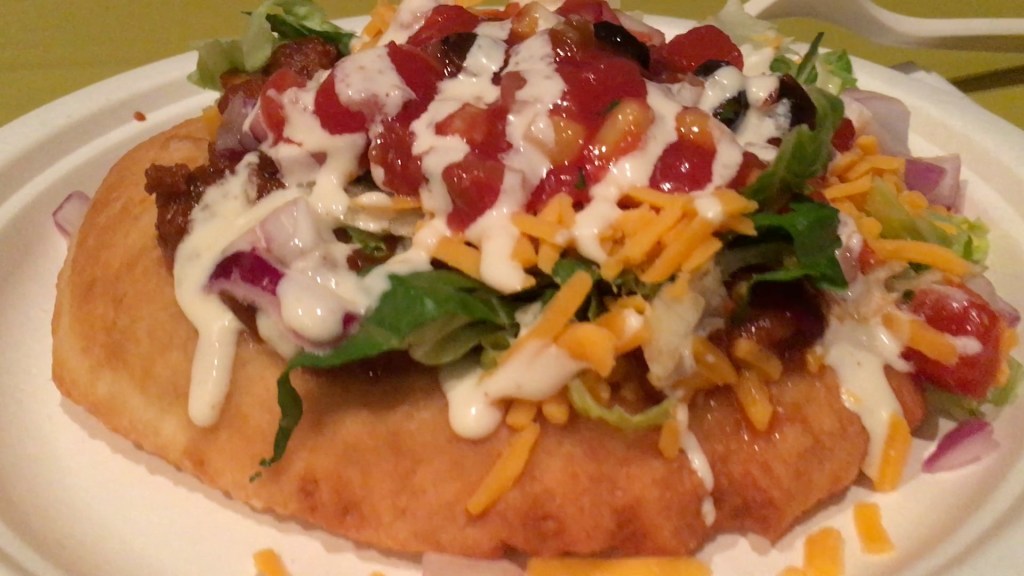
Sometimes cultures brought an ingredient to the places they colonized, and the Indigenous peoples adopted it into their own cuisine. Bannock (fry bread) of the Indigenous peoples of Turtle Island (North America) is an example of this. European settlers brought flour and other ingredients that were foreign to Indigenous peoples, and they made their own food with those ingredients. There’s a lot more to the history of Indigenous food in North America, and if you’re interested, this video is an excellent start.
Dutch patat met pindasaus
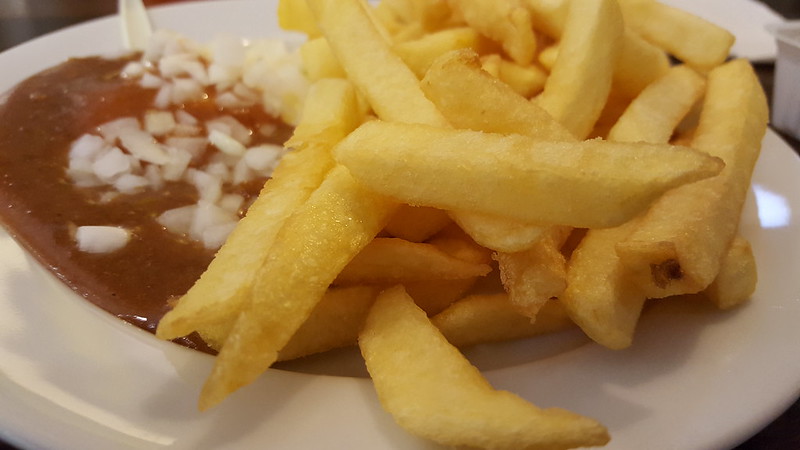
The reverse is also true, and cultures have been influenced by the food in the places they colonized. One example is patat met pindasaus (fries with peanut sauce). The fries are Dutch, and the sauce is a variation of peanut sauce from Indonesia, which was once a Dutch colony.
Korean budae jjigae
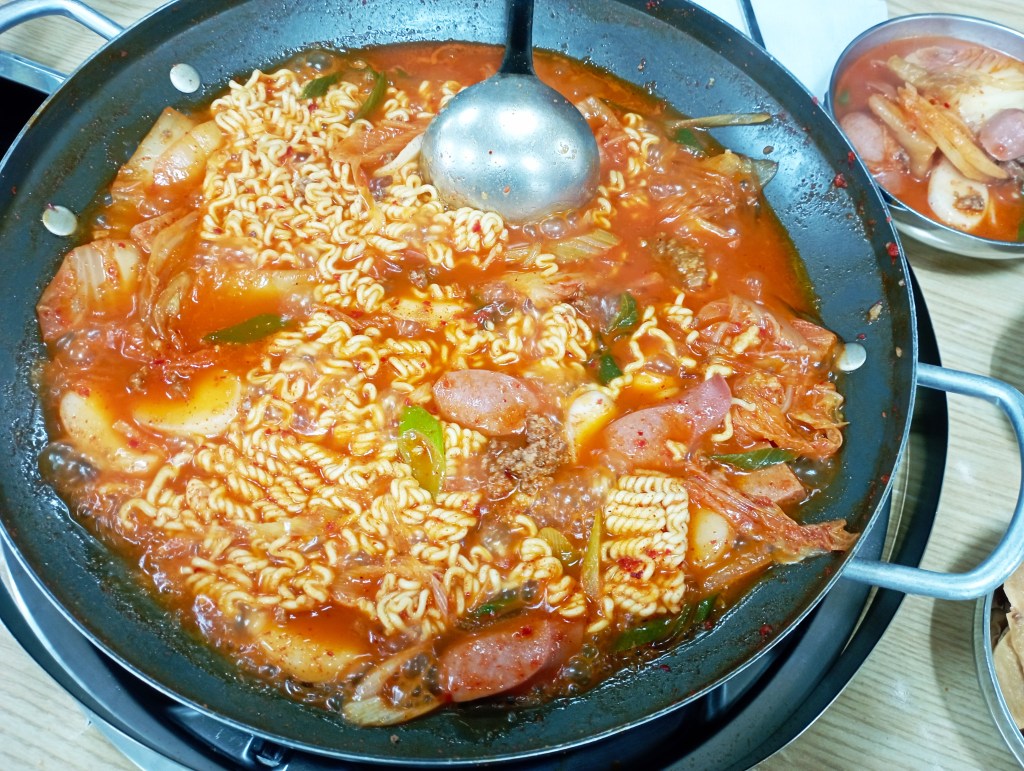
Ingredients also travel in post-war times. Korean Budae Jjigae (army stew) is a great example of this. It is made from ingredients that were available to Koreans after the war in the 1950s including US army rations, such as SPAM, canned sausages, and American cheese. They combined these with traditional and local Korean food such as kimchi, gochujang (spicy red pepper paste), and mushrooms. They used whatever was available to make a delicious stew which is still enjoyed by Koreans (and lovers of Korean food) today.
Travelling a world of food
These are just a few examples of how ingredients and dishes have travelled around the globe, evolved over time, and mixed with other dishes. Even though food doesn’t erase its difficult histories, maybe it can restore a little of what has been lost. Do you know of any other examples? Leave a comment describing the history of the dish.
image sources:
budae jjigae – Suohros, CC0, via Wikimedia Commons
patatje oorlog – www.snack-nieuws.nl
feature image generated by WordPress AI

 Connecting Clouds

Leave a reply to S Kumar Cancel reply